Most honey on supermarket shelves has been heated to stay clear and runny forever, pushed through micro-filters, and sometimes blended with cheaper syrups. It looks like honey. It behaves like honey. It is mostly not honey.
What ‘raw’ actually means
Raw honey is extracted from the comb and strained — never pasteurized, never ultra-filtered. That means it keeps its pollen, its enzymes, and its yeasts. Those yeasts are exactly why raw honey crystallizes: they’re alive, and over time the glucose settles out of solution. Crystallization isn’t spoilage. It’s proof nobody cooked your honey.
Three tells on the label
- ‘Blend of EU and non-EU honeys’ — code for ‘we don’t know and neither will you’
- A single floral source and a region — wildflower, acacia, forest — traceable honeys name where they came from
- Crystals in the jar — a good sign, not a defect
Why small-batch apiaries win
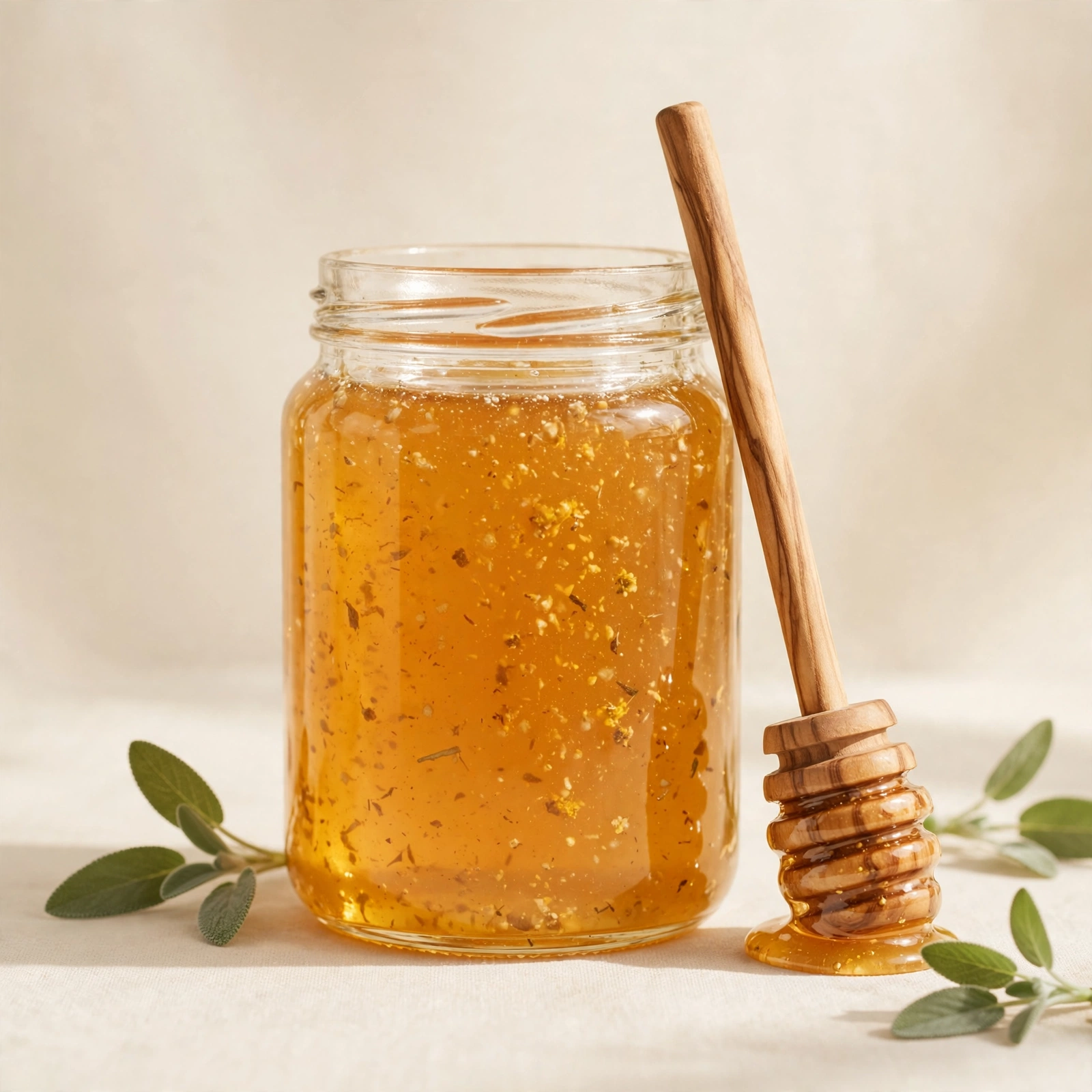
Our wildflower honey comes from small Balkan apiaries — hives that move with the bloom, not industrial extraction lines. Each jar is from one harvest, never blended across seasons. The flavor shifts slightly year to year, the way real food does. Wildflower notes up front, a warm caramel finish, and a texture that thickens in winter because nobody tampered with it.
If your honey crystallizes and you want it liquid again: stand the jar in warm (not boiling) water and stir. That’s the whole trick.
Leave a Reply